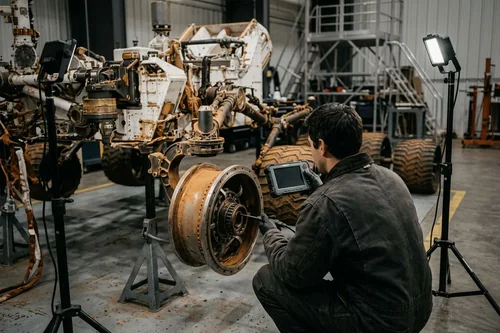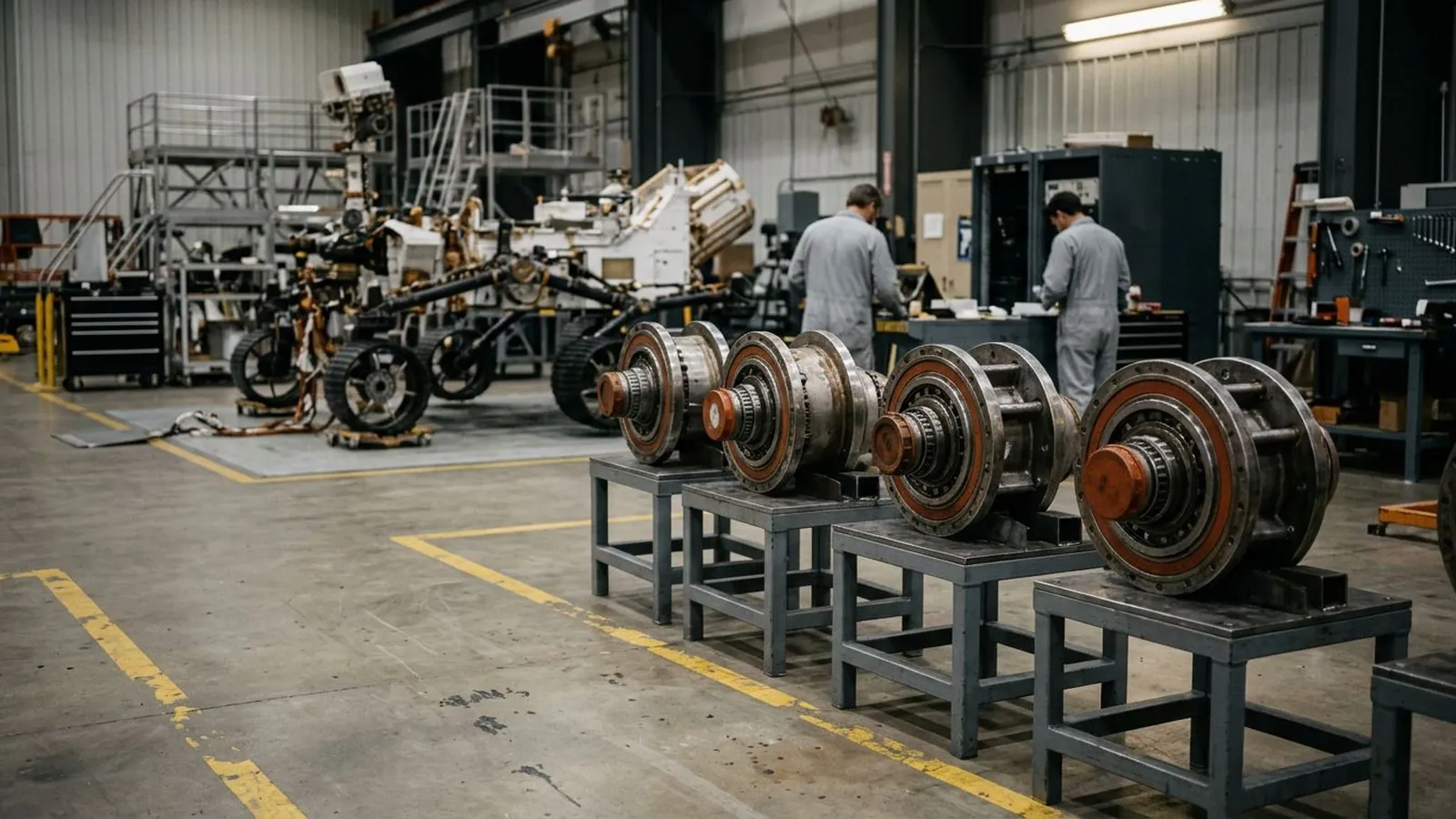
Keep the Fleet Rolling With Regolith-Sealed Wheel Bearing Requalification
Mars Rover Supply is now accepting wheel bearing assemblies for requalification and return to MRS-9100 service condition.
When a drive-train bearing starts to sing, the instinct is to condemn the whole hub. Most of the time that is the wrong call. Seal migration, dry-film depletion, brinelled races, and regolith intrusion are all recoverable conditions, and our technicians at Tharsis Yard have rebuilt bearing assemblies across every platform we ship to prove it.
Requalification returns a worn assembly to characterized MRS-9100 condition. Every unit runs under load in the closed-loop simulant arena and through a full diurnal thermal profile before it is released back to your program.
- Savings vs. New-Build Assembly
- up to 60%
- Return on Investment
- > 3x
- Requalification Warranty
- 3 year
- Analog Terrain Logged
- 11,400 km
Dedicated Wheel Bearing Requalification Capabilities
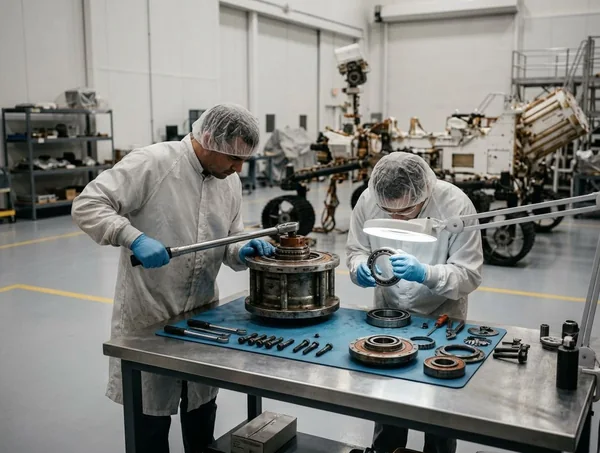
We requalify wheel bearing assemblies across the full MRS platform catalog and a growing list of partner vehicles. Our technicians know the load paths and seal architecture of each hub, and every inbound unit goes through teardown inspection so wear is characterized before a single part is ordered.
Current wheel bearing requalification capabilities include:
- Carriage Class 4-Crew — Hub Assembly MRS-4410-H06
- Carriage Class 4-Crew — Idler Bearing Set MRS-4410-B12
- Cartwright Heavy 8-Crew — Hub Assembly MRS-4820-H08
- Scout-7 Survey — Drive Bearing MRS-2207-B04
- Scout-7 Survey — Rocker Pivot Bearing MRS-2207-P02
- Haulmaster-21 — Load Hub Assembly MRS-6121-H10
- Haulmaster-21 — Trailer Interface Bearing MRS-6121-T03
- Regolith-Sealed Bearing Cartridge, all platforms MRS-9100-RSC-1
- Legacy Prospector-4 — Hub Assembly MRS-1104-H06 (limited)
Forward stock of wheel bearing assemblies at Tharsis Yard lets us requalify or exchange a damaged hub without waiting on a new-build fabrication slot.
Common Causes of Wheel Bearing Failure in Martian Service
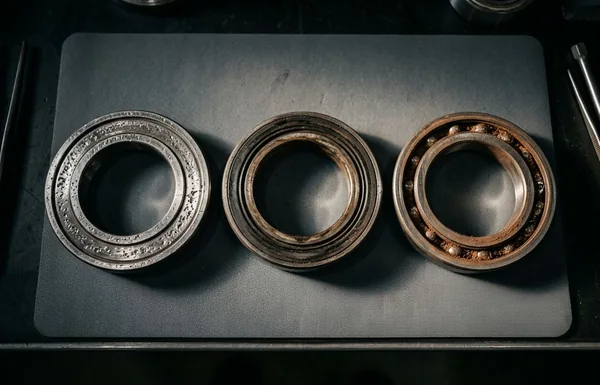
Regolith intrusion, seal migration, and thermal shock across the diurnal cycle drive most bearing failures on surface platforms. We requalify assemblies presenting a wide range of conditions, including:
- Regolith intrusion past the primary seal
- Dry-film lubricant depletion
- Brinelling from landing and offload shock
- Race spalling under sustained load
- Thermal-cycle seal migration
- Cage fracture
- Cold-weld galling in vacuum service
- Perchlorate corrosion of race surfaces
- Overload from unplanned terrain events
Requalification returns these assemblies to characterized condition at 50 to 75% below new-build pricing. A dedicated ultrasonic and CO₂-snow cleaning cycle lifts embedded simulant that conventional solvent washing leaves in the raceway — which is what makes a second service life possible at all.
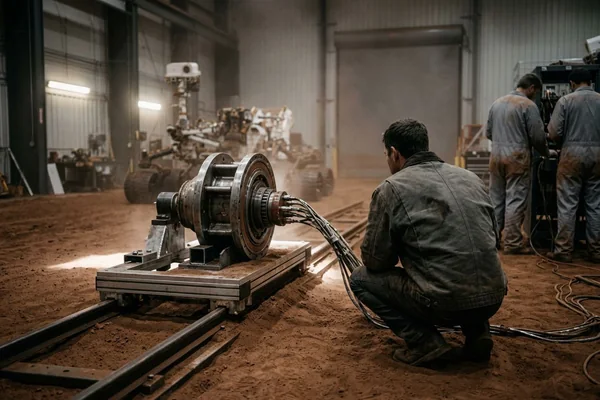
Why Program Engineers Trust MRS Wheel Bearing Requalification
The requalification program is built around schedule. We triage inbound assemblies the day they reach Tharsis Yard and do the work in-house, which returns hardware without the new-build lead time that drives most program slips.
Rather than committing budget to a new hub, requalification restores races, cages, seals, and dry-film surfaces to characterized MRS-9100 condition. It protects the sustainment line and extends the service life of hardware your program has already qualified.
Because we hold forward stock of bearing cartridges and hub components, we replace what falls out of tolerance without waiting on a fabrication slot. Every requalified assembly then runs under load in the closed-loop simulant arena and through a full diurnal thermal profile before release.
Program engineers work with us because we understand how bearing condition propagates into odometry error, drive-current draw, and traverse planning. We treat a wheel bearing as a mission-availability item, not a consumable.
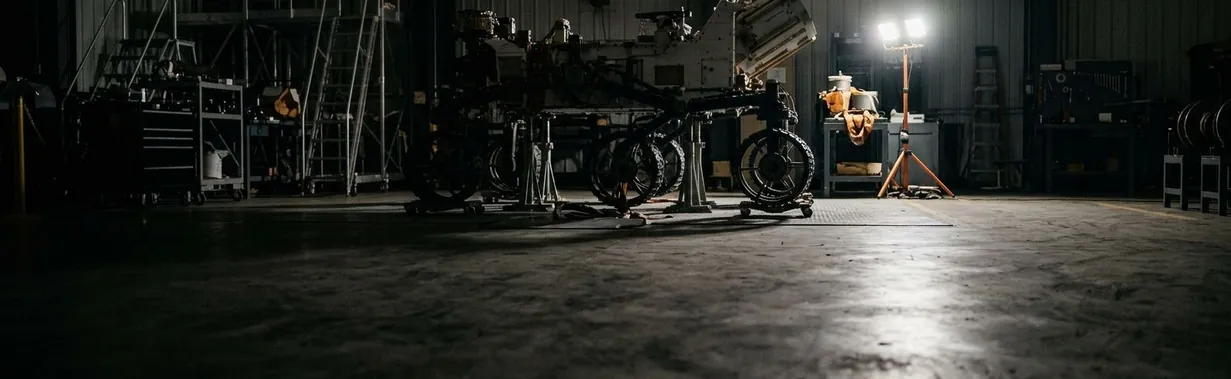
Request a Wheel Bearing Requalification Quote
If your telemetry is showing rising drive current, off-nominal wheel slip, or bearing noise on the acoustic channel, act before the hub is unrecoverable. A senior program engineer responds to every inbound within one business day with a characterization plan and a quote. Use the form above to open a case.
Request A QuoteFAQs About Wheel Bearing Requalification
How long does wheel bearing requalification typically take?
Routine requalification runs 10 to 14 days; mission-critical cases are turned in five. Turnaround depends on the platform and the extent of race damage, but because we hold forward stock of bearing cartridges and hub components at Tharsis Yard, we avoid the fabrication lead times that come with a new-build order. In most cases a requalified assembly ships well ahead of a new one.
Can a requalified bearing match a new-build assembly?
Yes. Requalification replaces races, cages, seals, and dry-film surfaces, then characterizes the finished assembly under load before release. The deliverable is not simply a working part — it is a part with a current MRS-9100 characterization record attached to its serial number.
What environmental factors accelerate bearing wear on Mars?
Perchlorate-bearing fines are the dominant driver — they migrate past a degraded seal and act as an abrasive slurry in the raceway. Diurnal thermal cycling of 90 K or more works the seal interface loose over time, and low-pressure CO₂ service promotes cold-weld galling wherever dry-film coverage has thinned. Landing and offload shock contribute brinelling that often does not present until several hundred sols into the mission.
Related Dispatches
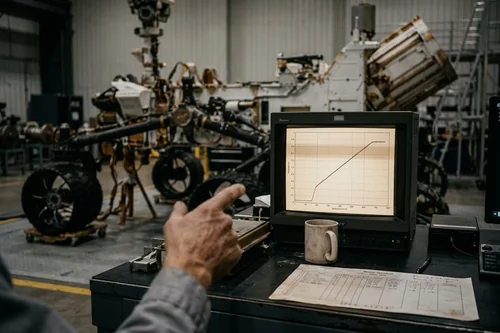
7 Telemetry Signs Your Wheel Bearing Needs Requalification | Sustainment Notes
The wheel bearing is the most heavily loaded interface on a surface platform. It carries vehicle mass, terrain shock, and the full diurnal thermal swing at the same time — and it is usually the first assembly to signal wear. When the signs appear in telemetry and go unread, the outcome is an unrecoverable hub and a stranded vehicle.
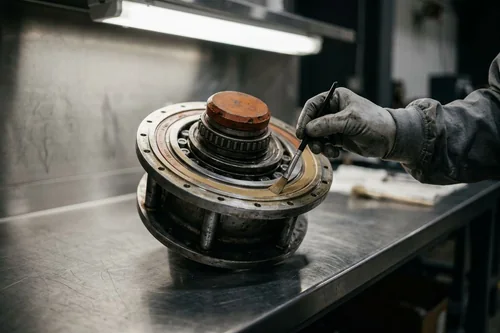
Dry-Film Reapplication Intervals: Spec Guidance vs. Analog Experience
In surface operations, mobility hardware is what turns a landed asset into a working mission. Whether a platform is new-build or requalified, tribology is what decides how long it keeps moving. Dry-film lubricant management is among the most critical and most routinely deferred items in a sustainment plan.